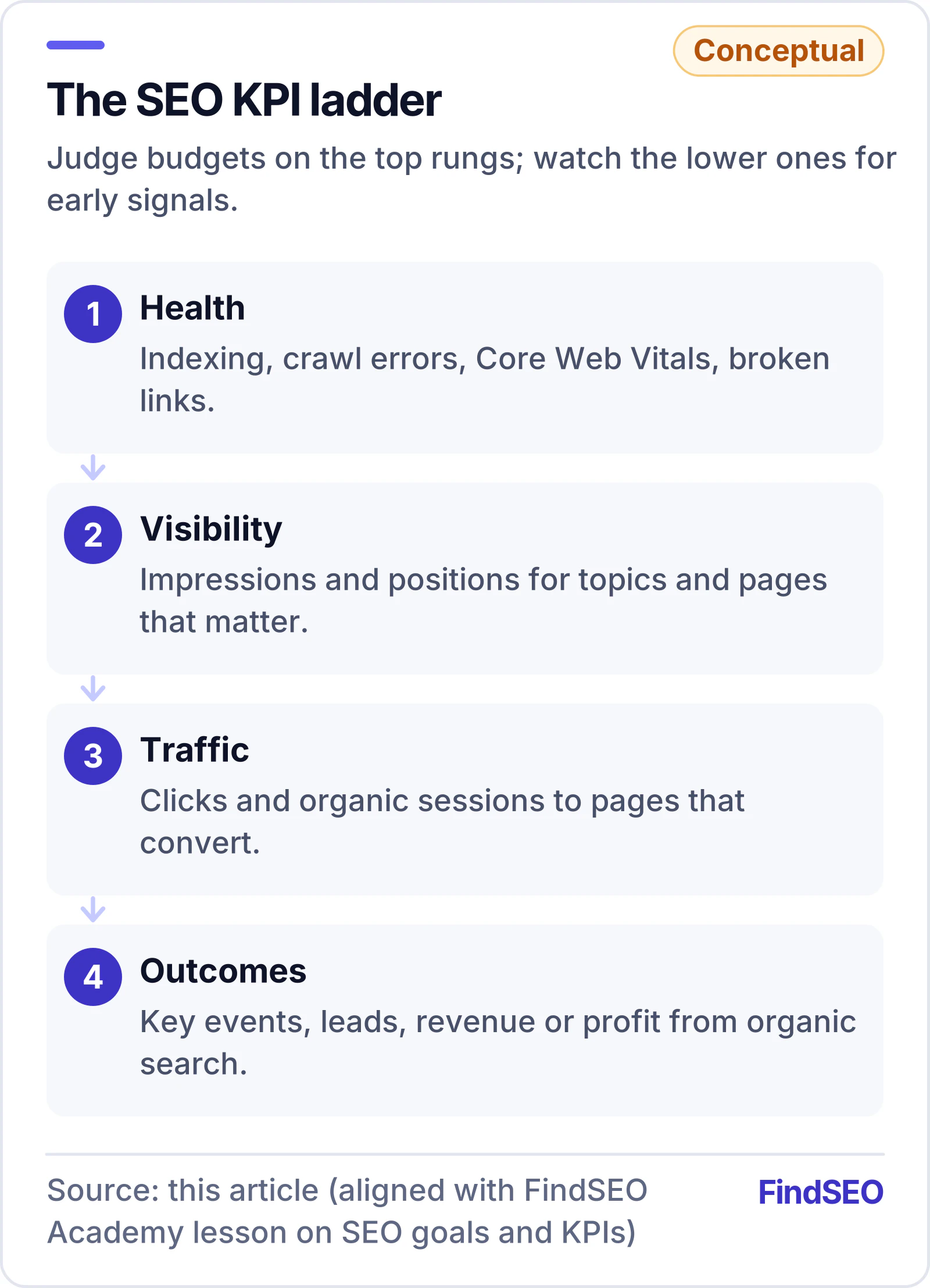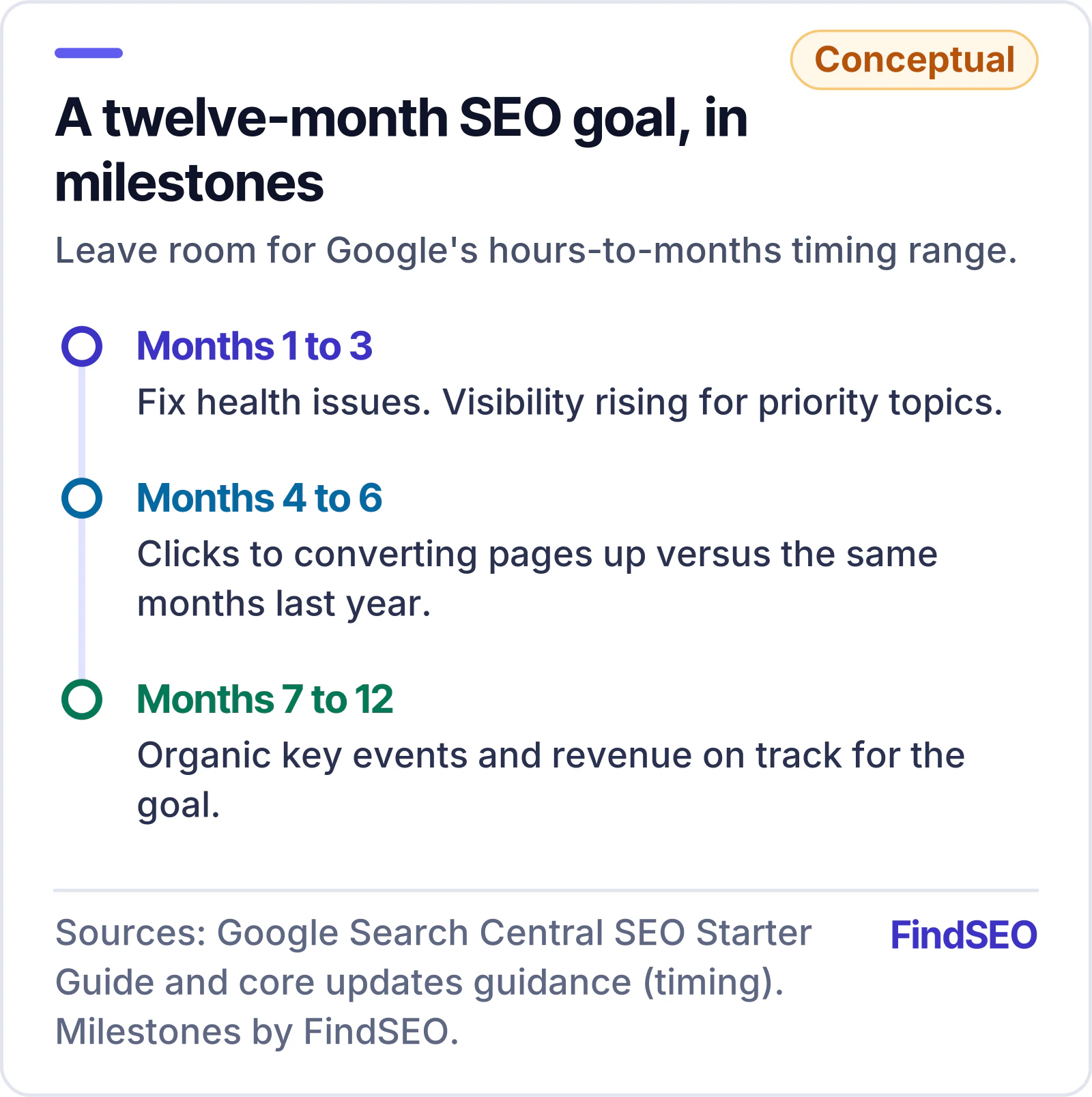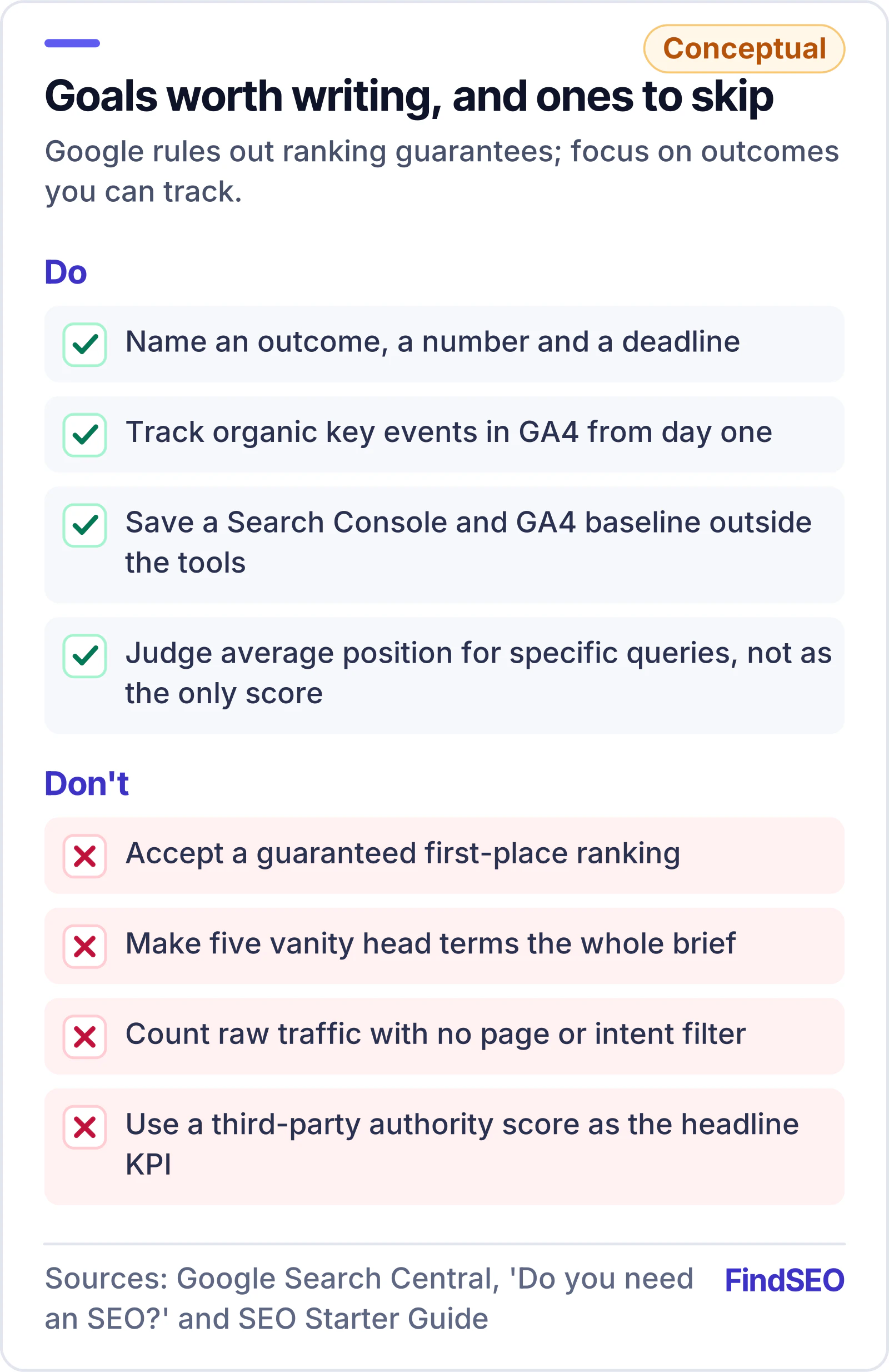
An SEO goal worth having names a business outcome, a number and a deadline. A KPI is the metric you watch to see whether you're on track. Rankings and traffic matter only when they lead to enquiries, bookings or sales you can value. Google itself says some search changes show in hours and others take months, and that nobody can guarantee a first-place ranking, so the sensible plan is a clear outcome, honest tracking and enough time for the work to show.
This guide covers how to write those goals, which metrics belong on the report, and how to brief an agency so everyone agrees what "worked" means up front. Our Academy lesson on setting SEO goals and KPIs covers the same ground in shorter form, and our guide to measuring SEO ROI shows how to turn the outcomes into a return figure once the numbers arrive.
What's the difference between an SEO goal and a KPI?
A goal is the result you want for the business. A KPI (key performance indicator) is a number you check regularly to see whether that result is getting closer. Confusing the two is how campaigns end up optimising for average position while enquiries stay flat.
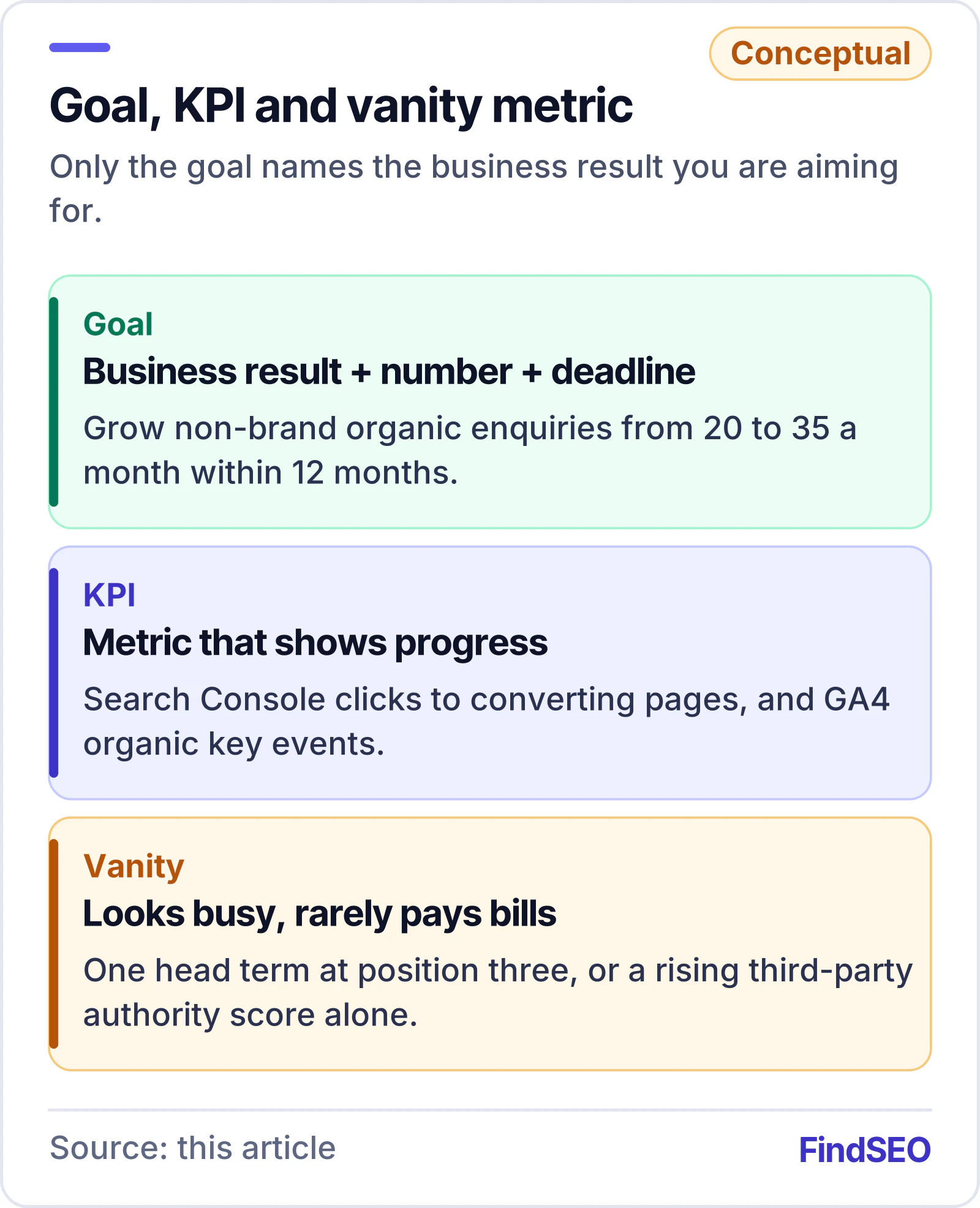
Write the goal in one sentence with three parts:
- The outcome — organic enquiries, bookings, trial sign-ups or profitable orders from organic traffic.
- The number — from a baseline you can show, to a target you can defend.
- The deadline — usually six to twelve months, because Google's SEO Starter Guide says some changes take effect in a few hours and others could take several months, and that you generally want to wait a few weeks before judging whether a change helped.
An example: "Grow non-brand organic enquiries for commercial cleaning in Adelaide from 20 to 35 a month within 12 months." That is specific enough to plan content and judge the agency. "Get more traffic" is not.
KPIs hang underneath that goal. Impressions for the right topics, clicks to the right pages and key events in Google Analytics 4 are useful. A single vanity keyword at position three usually is not, unless it sits inside a broad, relevant set you track for trends.
What does Google say about judging progress?
Three points from Google's own documentation shape any honest goal:
- Timing varies. The SEO Starter Guide says every change takes some time to be reflected, from a few hours to several months. Google's core updates guidance adds that quality improvements can take effect in a few days, but it can take several months for Google's systems to confirm a site is producing helpful, reliable, people-first content.
- No ranking guarantees. Google's page on whether you need an SEO says that if someone guarantees first place in search results, find someone else. It also states that Google never accepts money to include or rank sites in organic results.
- Helpful content is the bar. Google's guide to creating helpful, people-first content is the self-assessment Google wants site owners to use. Goals that push thin, scaled pages to "win keywords" fight that guidance.
Build that range into the deadline. Our article on how long SEO takes explains it further. If you need leads sooner, compare the timeline with SEO versus Google Ads.