An SEO contract should spell out exactly what work you're paying for, how long you're committed, how either side can leave, and who owns your content, accounts and data at the end. It should also commit the agency to working within Google's rules, and it should never promise guaranteed rankings. If a clause is vague on any of those points, ask for it to be rewritten before you sign.
This guide walks through the clauses to look for, the terms that deserve a second look, and a checklist you can take into your next agency meeting. It's general information, not legal advice. For a large engagement, a lawyer's review is money well spent.
Why does the contract matter so much in SEO?
Because the agency's work happens on your website and under your name. Google's own page on hiring an SEO is direct about it: "Ultimately, you are responsible for the actions of any companies you hire." The same page warns that deceptive content created on your behalf could see your site removed from Google's index.

A good contract turns the questions you asked during the pitch into commitments. If you haven't had that conversation yet, start with what questions to ask an SEO agency before you hire (or the shorter printable questions checklist), then use the answers to check the agreement.
What should every SEO contract include?
Most solid SEO agreements cover the same ground. Check that yours has:
- The parties. The agency's full legal name and ABN (or company number overseas), and yours. You should know exactly who you're contracting with.
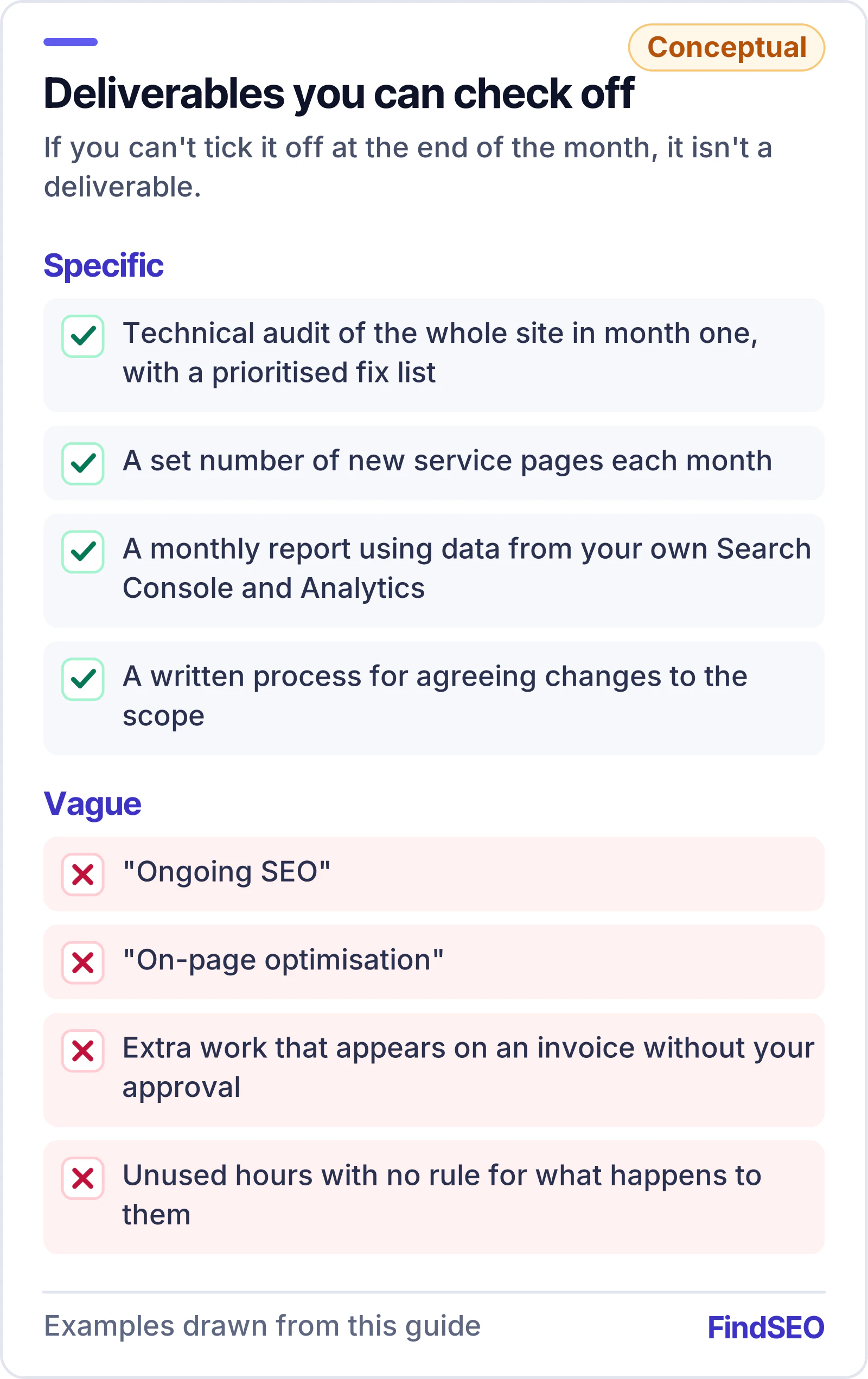
- Scope and deliverables. What will be done each month or by each milestone, such as an audit, a set number of pages, technical fixes or reporting.
- Exclusions. What isn't included, such as copywriting, development time, paid ads or content approvals that sit with you.
- Fees and payment terms. The monthly or project price, when invoices are due, and what happens to unused hours.
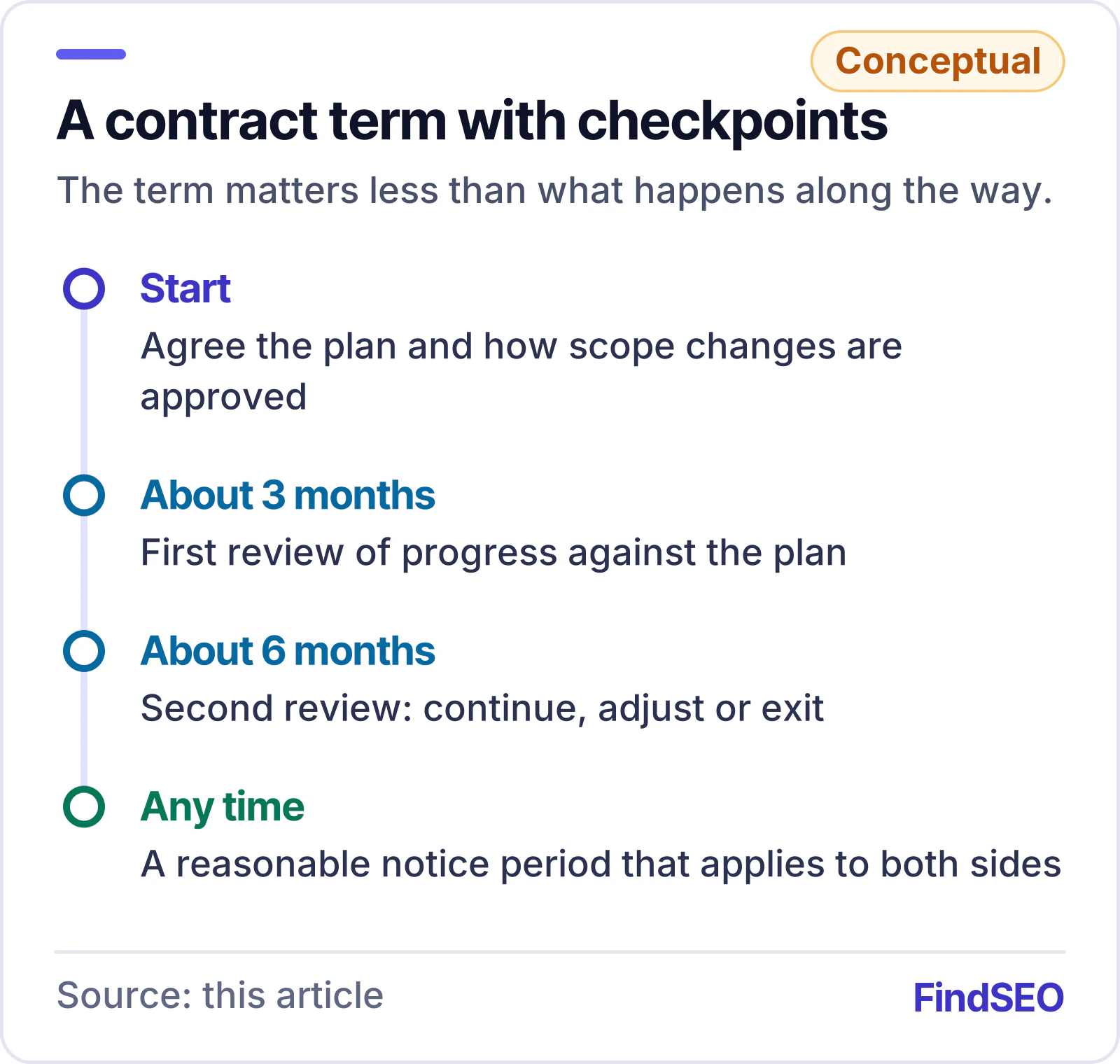
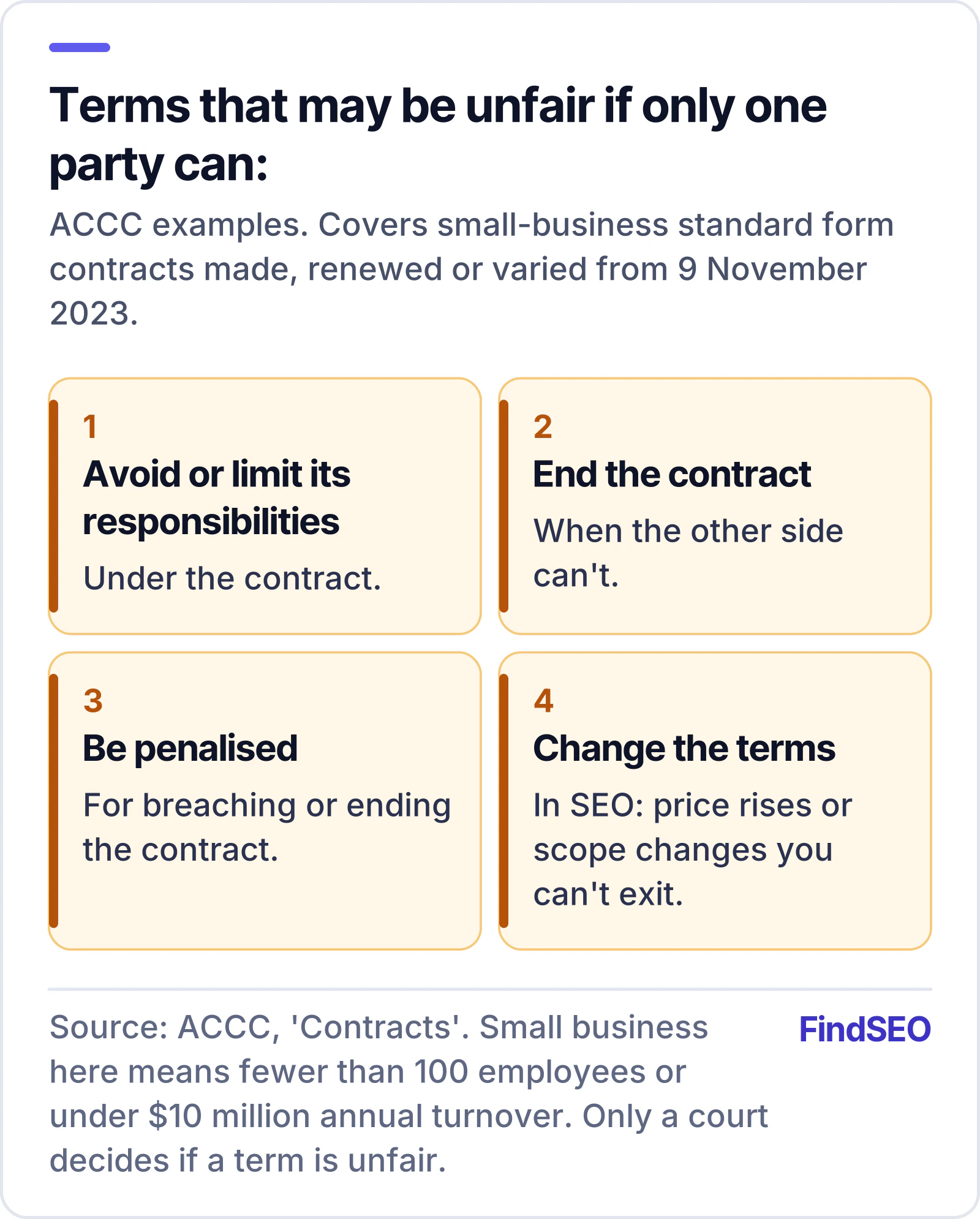
- Term, notice and exit. The minimum term, the notice period, and how either side can end the agreement.
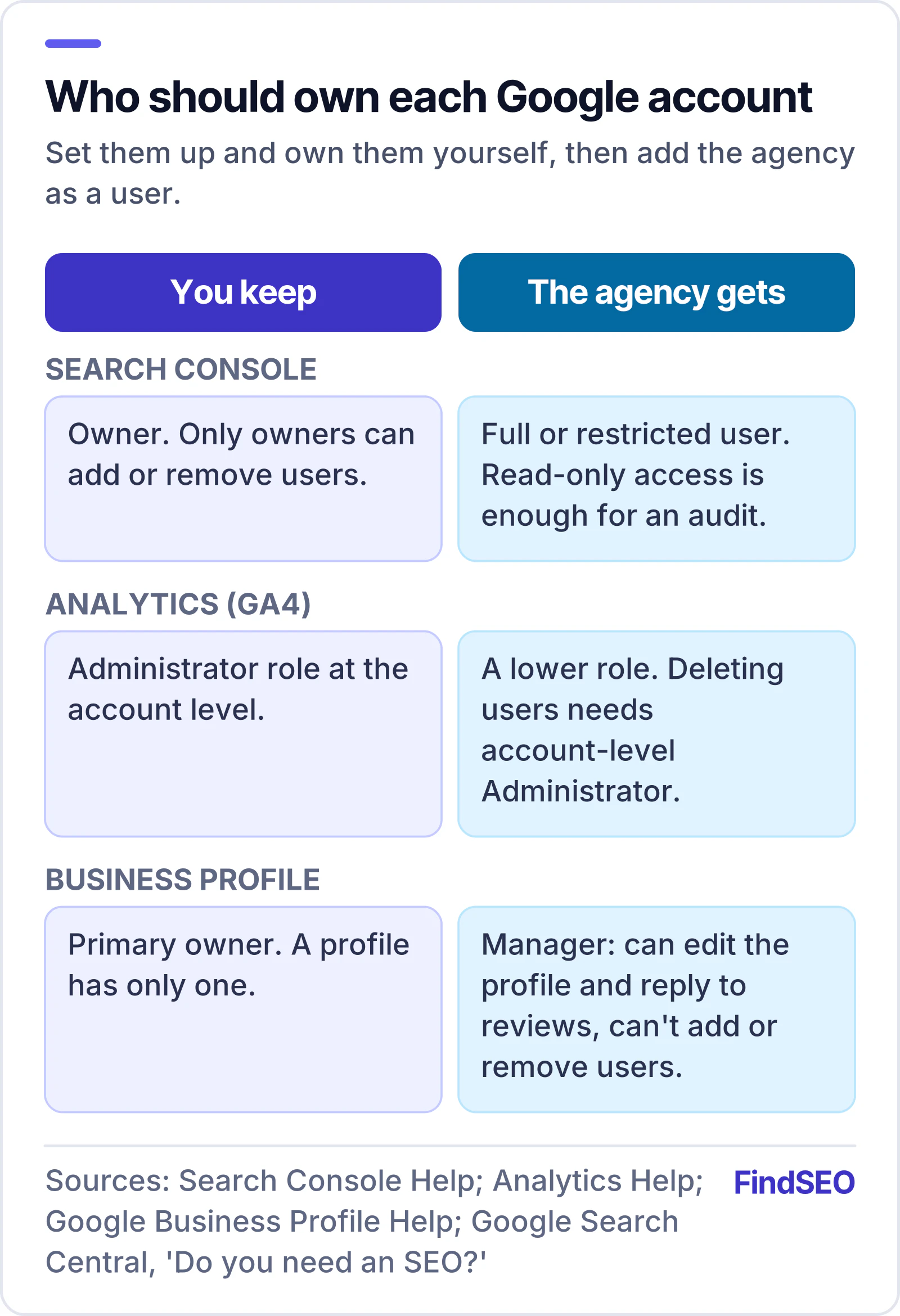
- Ownership. Who owns the content, designs, data and accounts created or used during the work.
- Access and security. Which accounts the agency gets, at what permission level, and how access is removed.
- Ethical practice. A commitment to follow Google's guidelines and applicable law.
- Reporting. What you'll receive, how often, and which data sources it uses.
- Confidentiality and data handling. How the agency stores your information and whether subcontractors or overseas teams see it.
- Handover. What the agency hands back when the work ends.
Our Academy lesson on working with your agency covers how to set these up in practice, and agencies can start from our free SEO contract template, which covers scope, term, fees, ownership, confidentiality and liability in plain English.