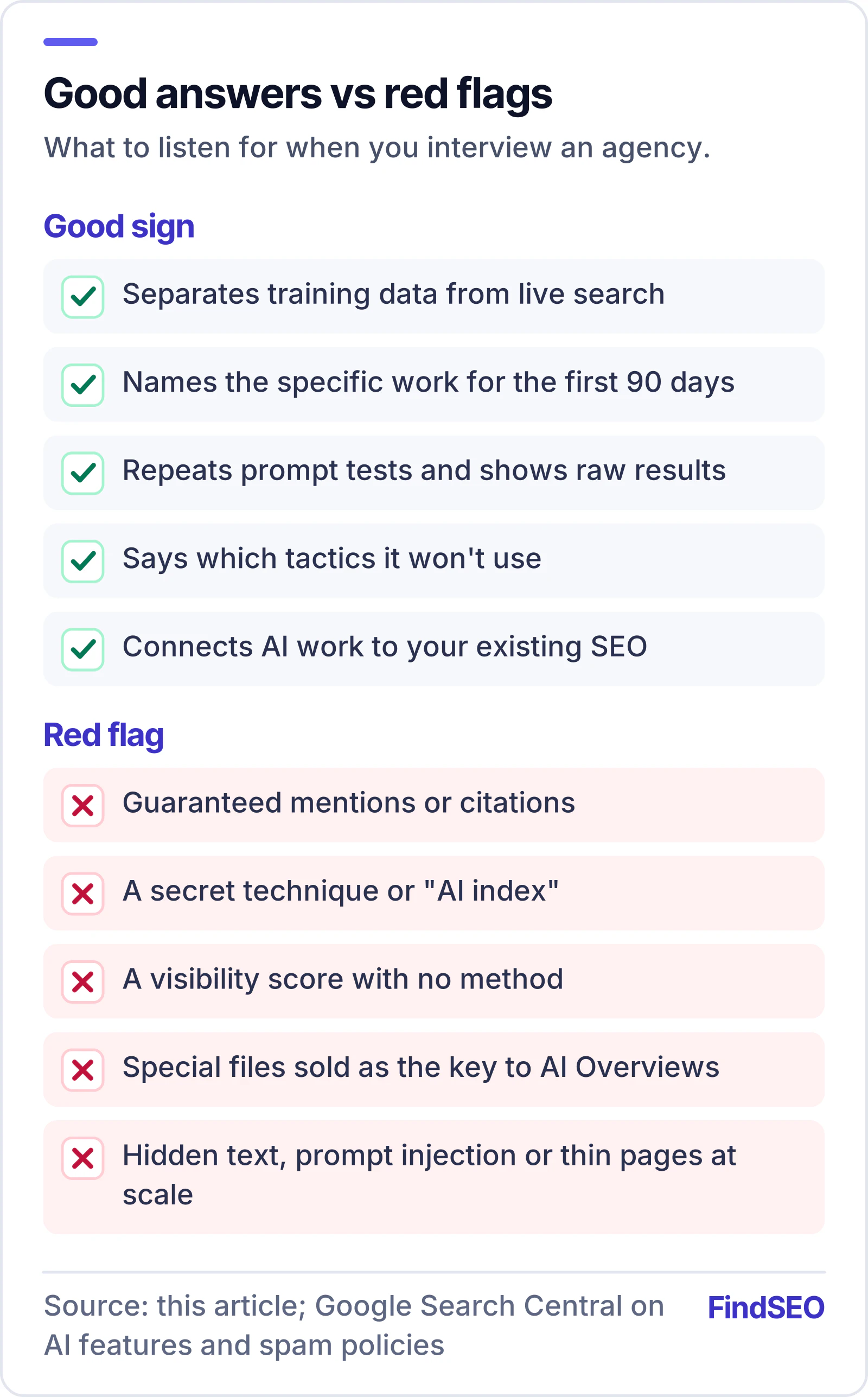
An AI SEO agency should be able to explain, in plain language, how AI search tools find and choose sources, what it will change on your site and beyond, and how it will measure progress. The best ones treat AI search as an extension of good SEO, show you their method, and never promise guaranteed mentions or rankings in AI answers. The worst sell mystery techniques, special files and invented metrics.
This guide covers what AI SEO work should include, the questions to ask, the red flags to watch for, and how to judge a proposal.
What does "AI SEO" actually mean?
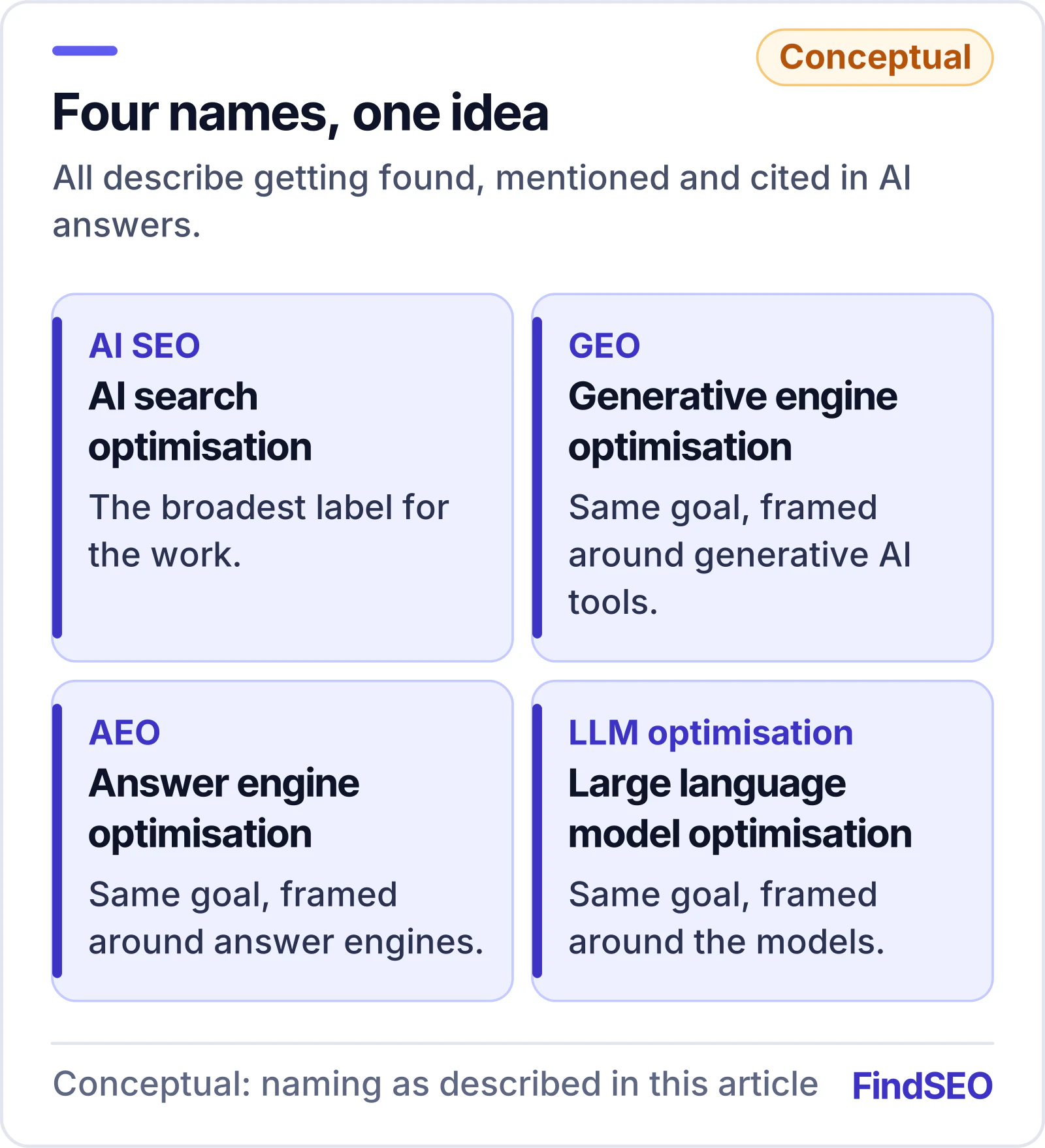
Agencies use several names for the same idea: AI SEO, generative engine optimisation (GEO), answer engine optimisation (AEO) or LLM optimisation. All of them describe work aimed at getting a business found, mentioned and cited in AI answers, such as Google's AI Overviews and AI Mode, ChatGPT search, Perplexity, Claude and Microsoft Copilot.
Most of these tools search the web while they answer, then cite what they find. That means the work looks a lot like SEO: making sure the right crawlers can reach your site, that your pages answer real questions clearly, that facts about your business are consistent everywhere, and that credible sites talk about you. Google says outright that there are no extra requirements or special optimisations needed to appear in its AI features beyond normal SEO best practice.

What good AI SEO work includes
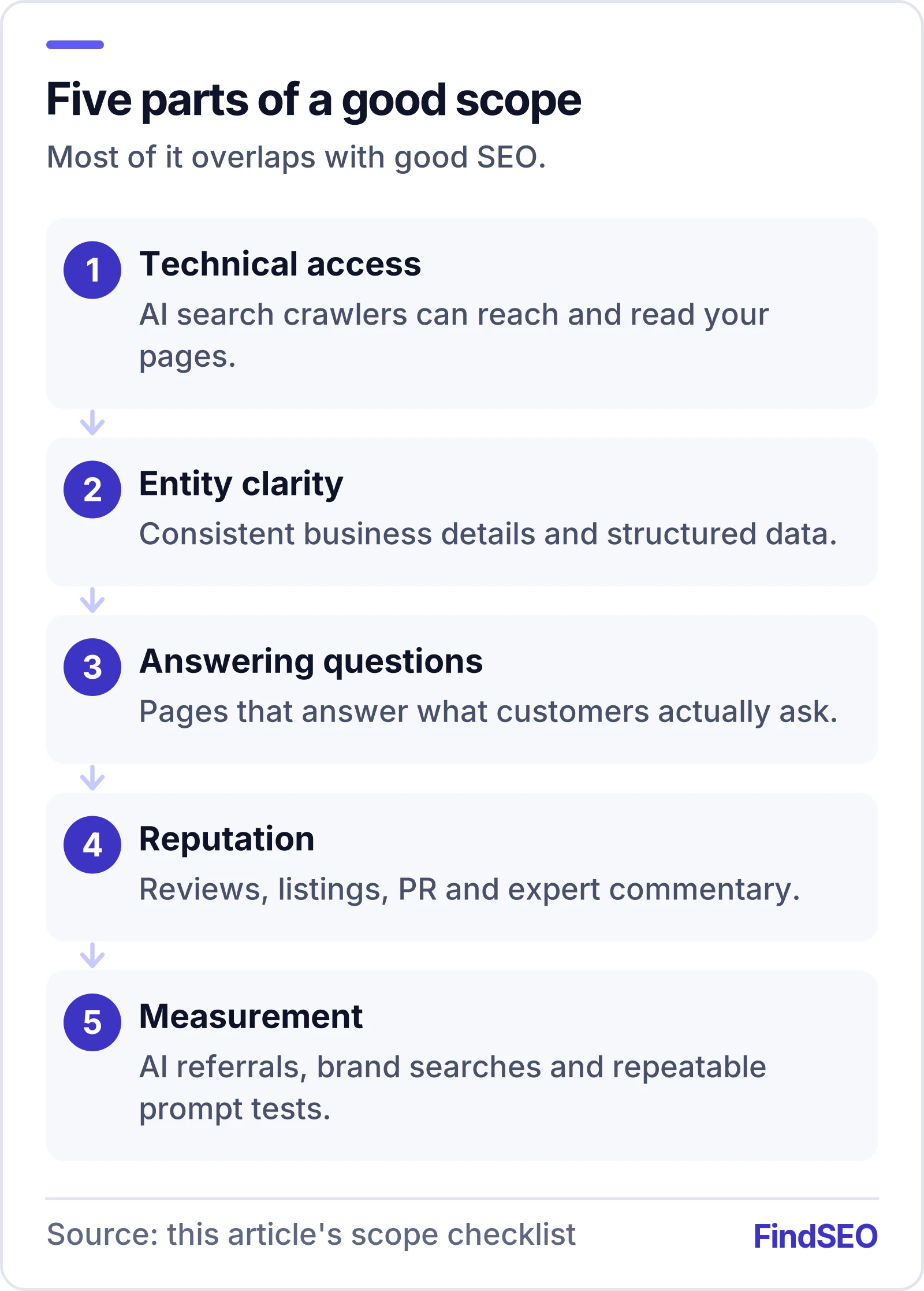
A solid scope usually covers:
- Technical access. Checking robots.txt, CDN and firewall settings for AI search crawlers (OAI-SearchBot, Claude-SearchBot, PerplexityBot, Bingbot and Googlebot), and making sure important content is readable without JavaScript.
- Entity clarity. Consistent business details across your site, Google Business Profile, directories and social profiles, with accurate Organization or LocalBusiness structured data.
- Content that answers questions. Research into the questions your customers ask, then pages that answer them directly, with clear headings and specifics such as prices, areas and timeframes. If the agency drafts these with AI, ask how each page is fact-checked. Our guide to whether AI content hurts SEO explains what Google expects.
- Reputation and mentions. Reviews, directory listings, digital PR and expert commentary on sites that AI tools are likely to read.
- Measurement. Tracking AI referral traffic in analytics, branded search trends, and a documented, repeatable set of test prompts across the tools that matter to you.
If a proposal includes llms.txt, that's fine as a small task, but it shouldn't be the headline.