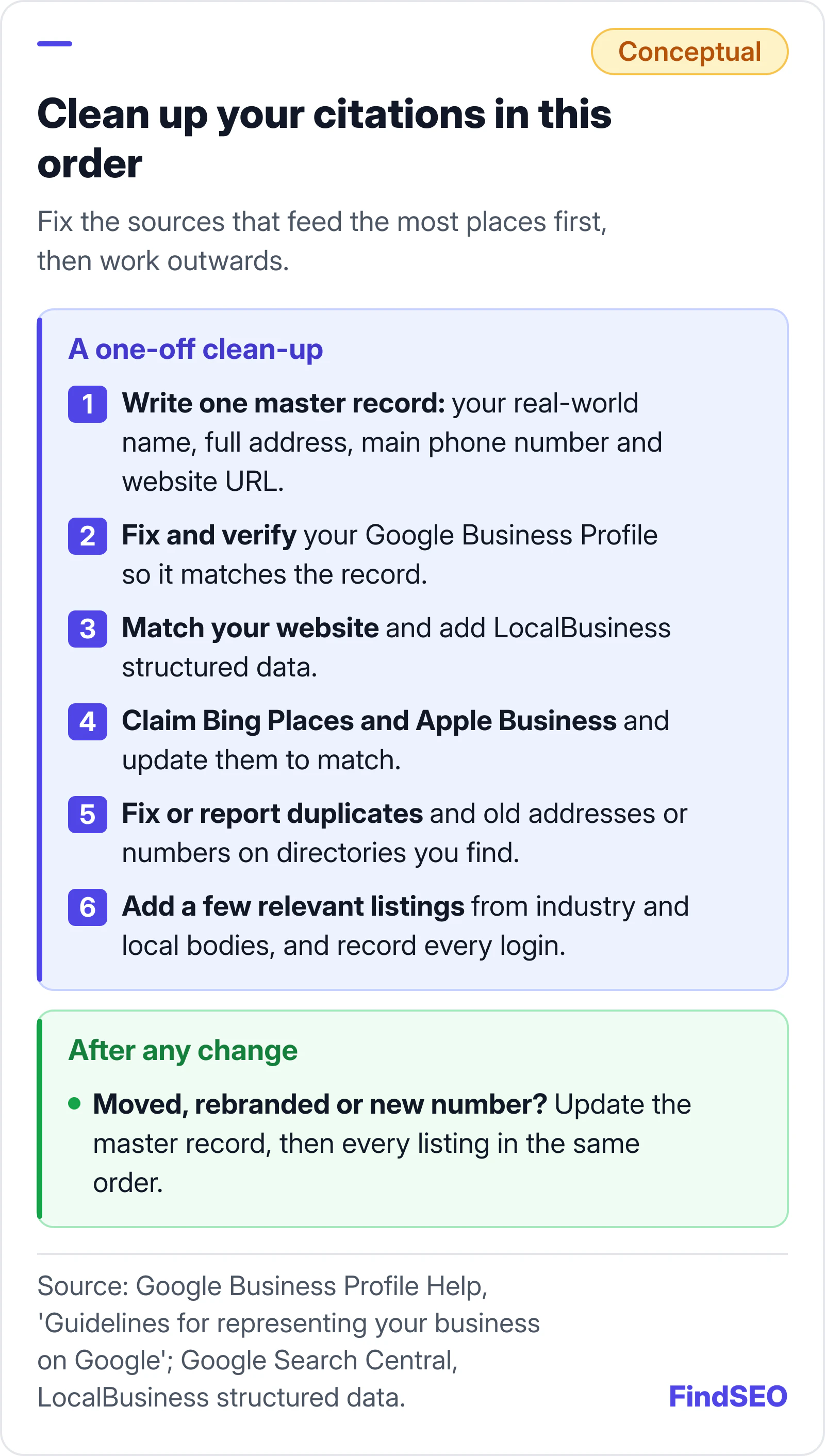
Local citations still matter, but for accuracy rather than volume. A citation is any mention of your business name, address and phone number on another site, such as a map app, a directory or an industry association. Google says it builds Business Profiles from several sources, including crawled web pages and licensed data from third parties, and that businesses with complete and accurate information are more likely to show up in local results. So the job today is to get a handful of important listings exactly right. Submitting your business to hundreds of low-quality directories adds little, and Google's spam policies list low-quality directory links as an example of link spam.
This guide explains how citations fit into local SEO now, which listings are worth your time and what to ask an agency that offers "citation building".
What is a local citation?
A local citation is any place online that lists your business details. The core of it is often called NAP: name, address and phone number. Many listings add your website, hours, category and photos too.
Citations usually fall into a few groups:
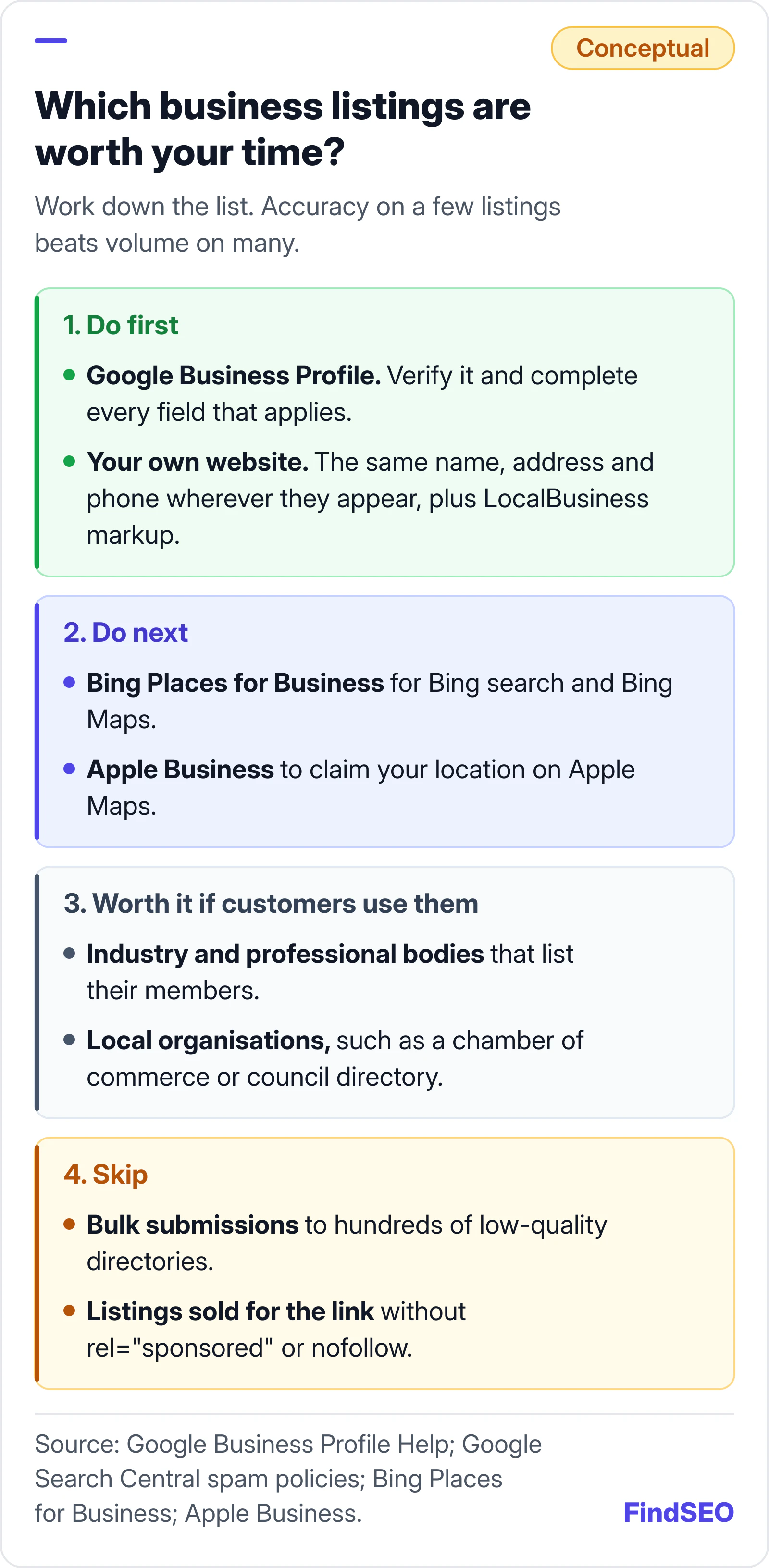
- Map and search platforms. Your Google Business Profile, Bing Places for Business and Apple's business listings for Apple Maps.
- General business directories. Sites that list businesses of every type by location.
- Industry and professional directories. Member lists from trade associations, professional bodies and licensing registers.
- Local sources. A chamber of commerce, a council business directory, a local news story or a club you sponsor.
- Unstructured mentions. Your business named in an article or blog post, with or without a link.
The first group matters most, because those platforms put your details in front of people searching maps. The rest matter when real customers use them, or when they help keep your details consistent across the web.
How does Google use citations for local rankings?
Google's local ranking help doesn't mention citations by name, and Google doesn't publish how much any one listing counts. What it does say is useful.
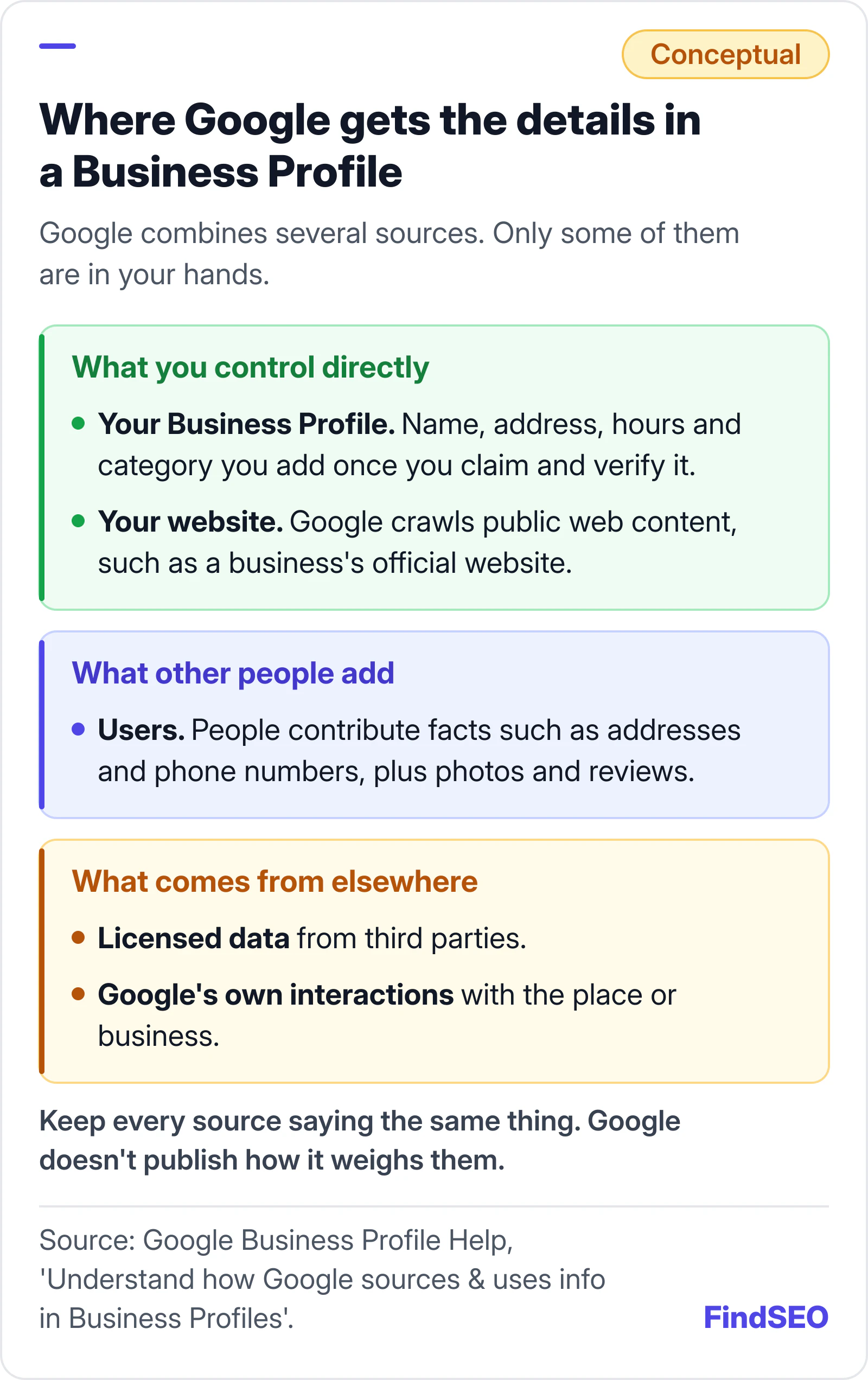
Its guide to how Google sources business information lists where the details in a profile come from: publicly available information such as crawled web content (for example a business's official website), licensed data from third parties, users who contribute facts, photos and reviews, including owners who claim their profiles, and information from Google's own interactions with the business. Google also notes that people may see details you didn't add yourself.
Then there's ranking. Google's tips to improve your local ranking say local results are mainly based on relevance, distance and prominence. Prominence is how well known a business is, and Google says it draws on information such as how many websites link to your business and how many reviews you have. The same page says businesses with complete and accurate information are more likely to show up, and that there's no way to request or pay for a better local ranking.
Put together, citations help in two ways. They're one of the places Google can confirm your details, and a listing on a site that people genuinely use can be part of what makes a business well known. Our guide to how Google ranks local results covers relevance, distance and prominence in more detail, including what decides the local pack.