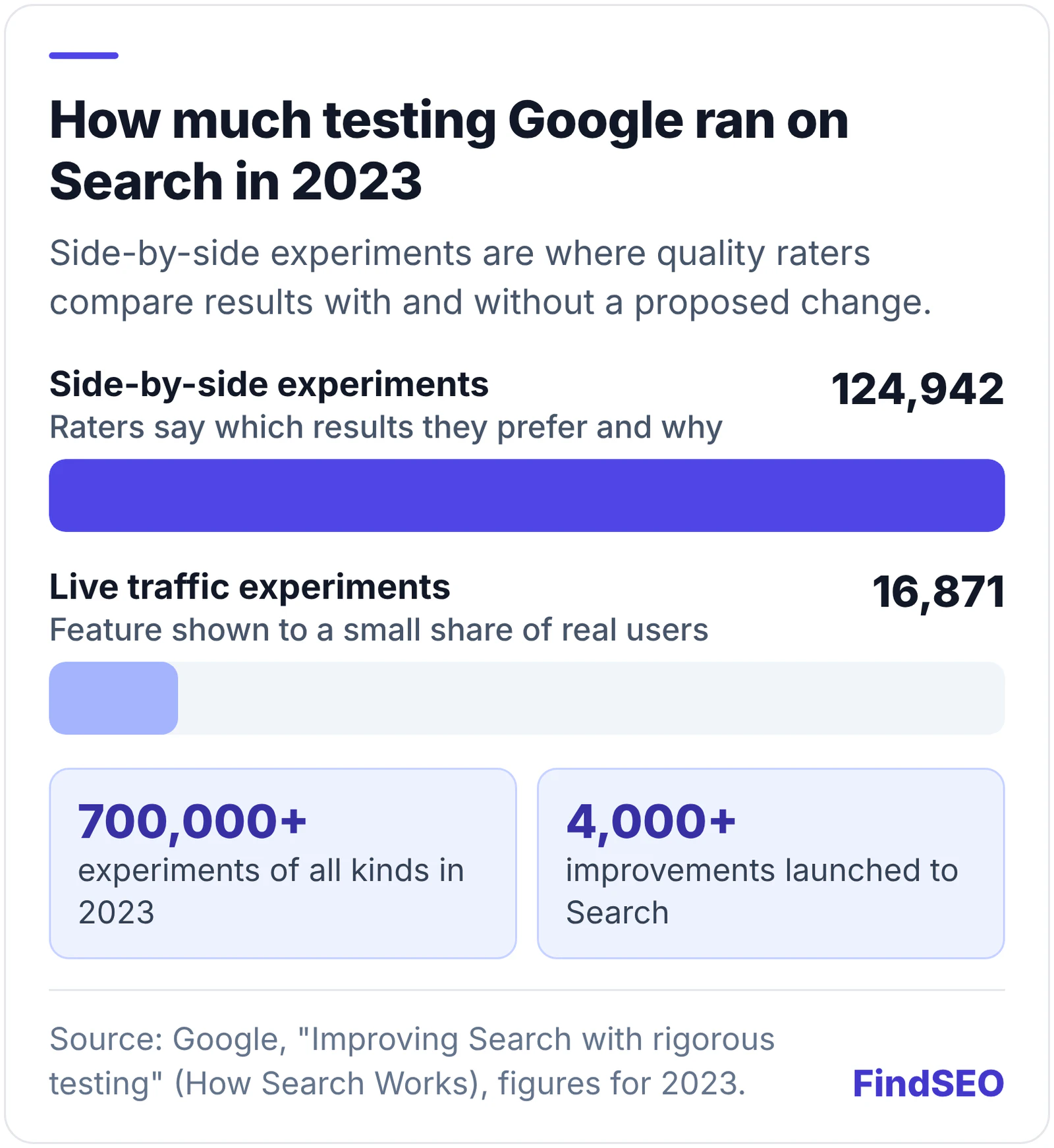
Google's Search Quality Rater Guidelines are the handbook its human raters use to judge search results, and the ratings they give don't directly change any site's rankings. Google uses them to check whether its ranking systems are working and to test changes before launch. That makes the guidelines a clear, public description of what Google means by a high-quality page, and a useful self-check for your own site. They aren't a list of ranking factors.
What are Google's Search Quality Rater Guidelines?
The Search Quality Rater Guidelines are a public document of well over 100 pages, written for the external raters who evaluate Google Search. The current version is dated 11 September 2025. Raters are asked to represent people in their own language and location, and to base ratings on the guidelines rather than their personal opinions.
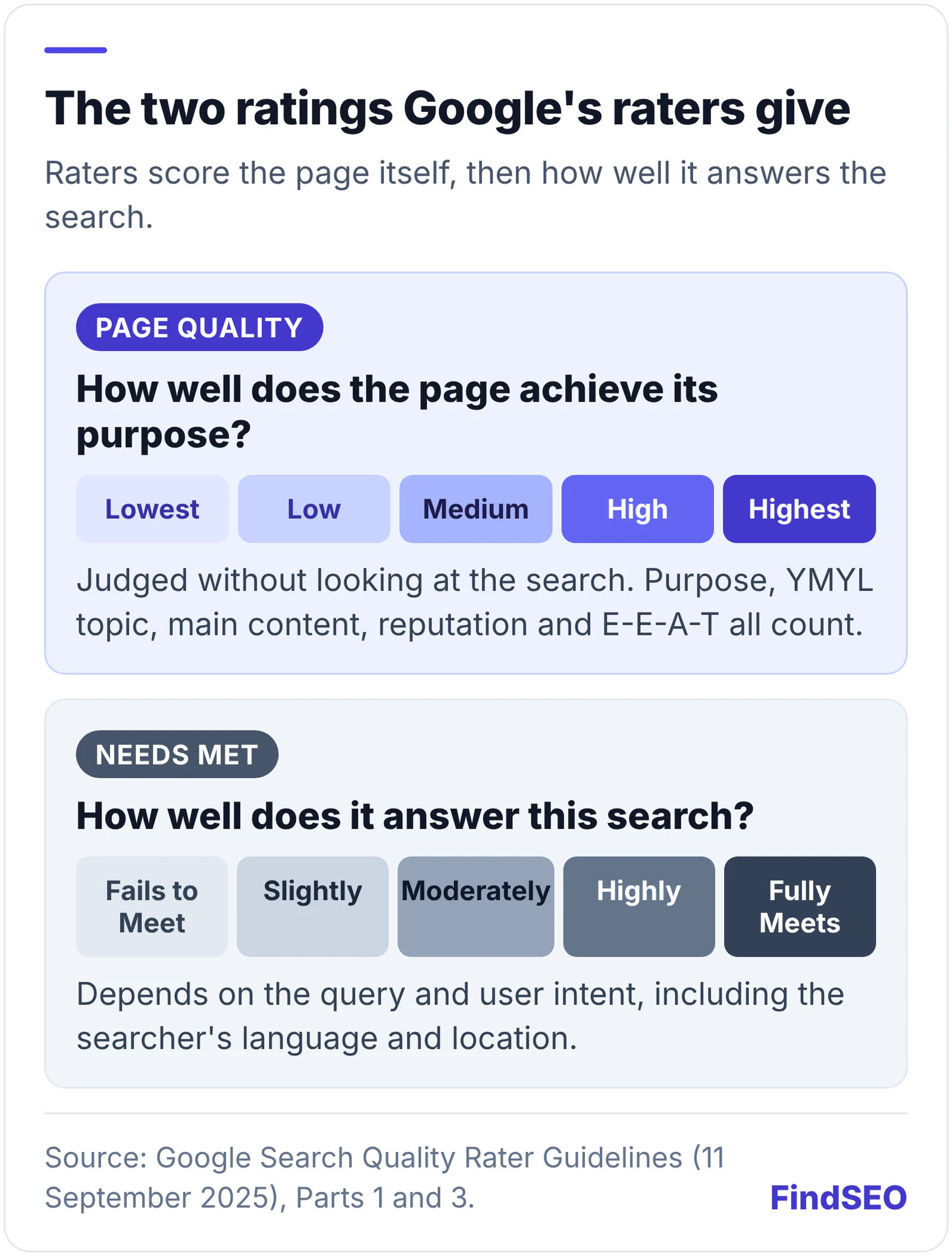
The document has three main parts:
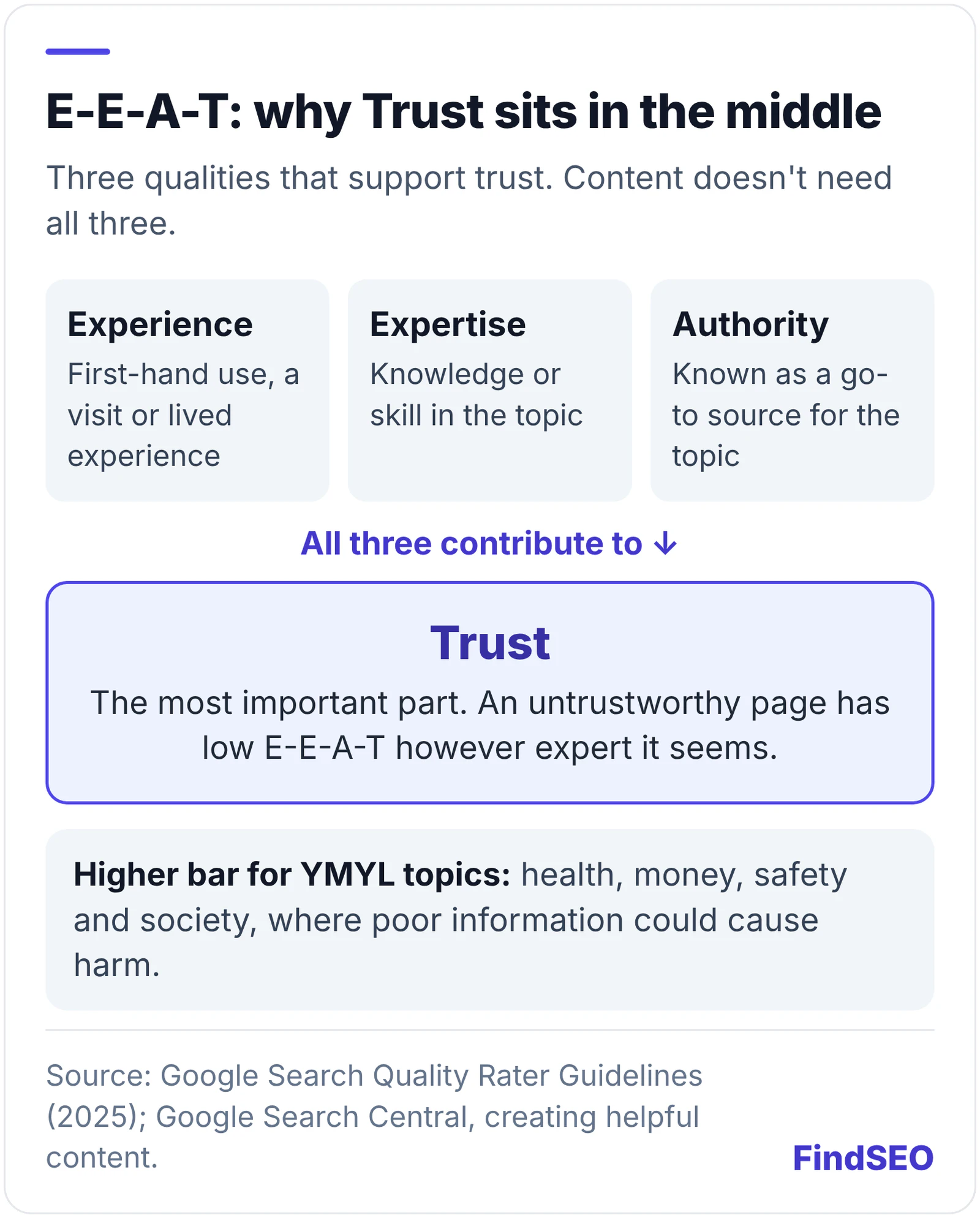
- Page Quality rating. How well a page achieves its purpose, including who is responsible for it and their reputation.
- Understanding search user needs. How to read a query and work out what the person is likely looking for, which is the same idea as search intent.
- Needs Met rating. How well a result answers a specific search.

Do quality raters affect your rankings?
No, not directly. The guidelines say so in their opening section: no single rating can directly change how a page or site appears in Google Search, or move results up or down. Google adds that using human ratings to position results wouldn't be feasible, because people could never rate every page on the web.
Google's guide to creating helpful content puts it more plainly. Raters "have no control over how pages rank" and rater data "is not used directly in our ranking algorithms". Google compares the ratings to feedback cards a restaurant collects from diners. They tell Google whether its systems seem to be working.
The indirect effect is real, though. Raters help Google decide which algorithm changes launch, and those changes then apply to every site. So if your pages look Low quality by the standards in the guidelines, you're exposed when a core algorithm update rolls out, even though no rater has ever seen your site.