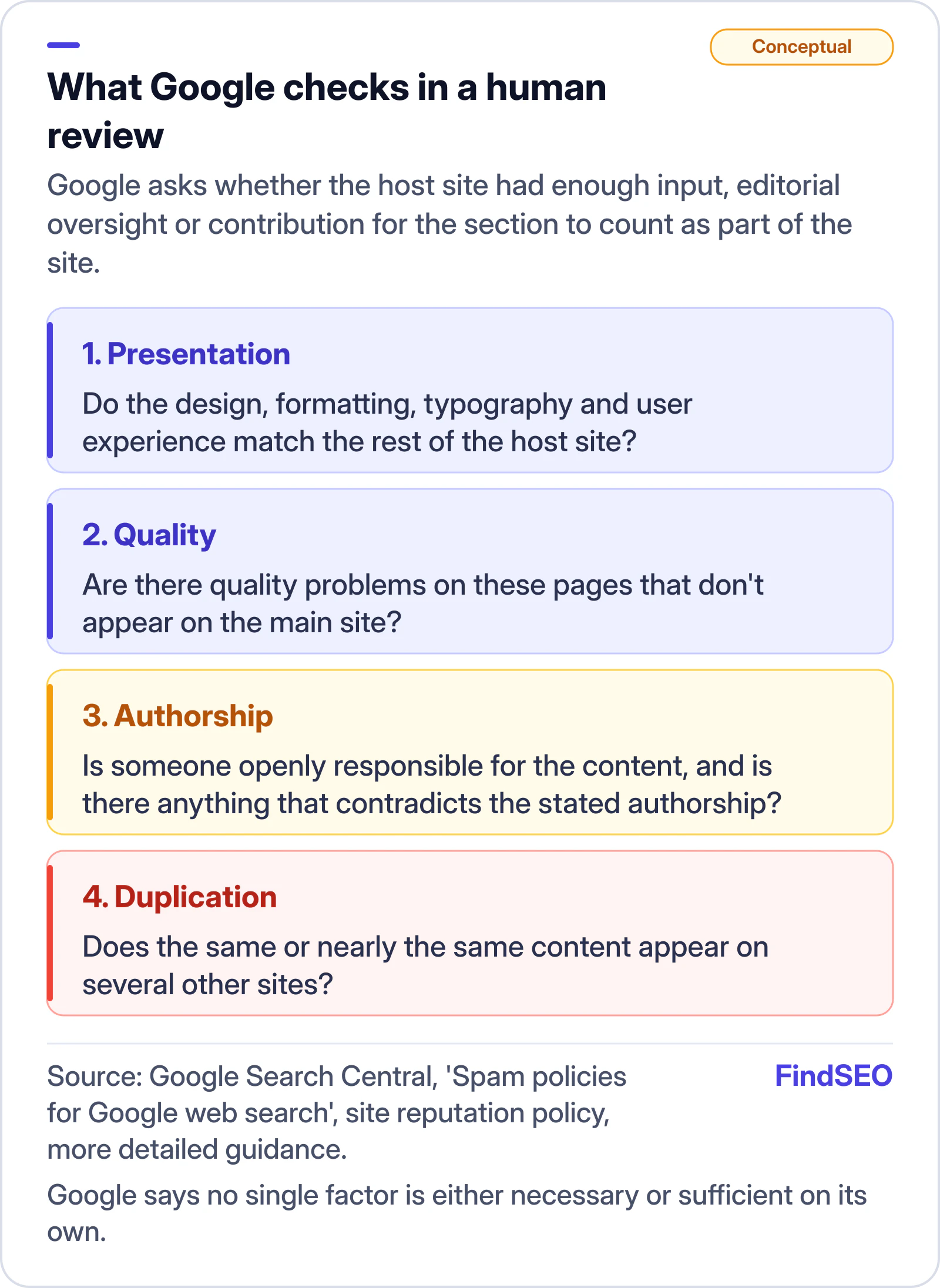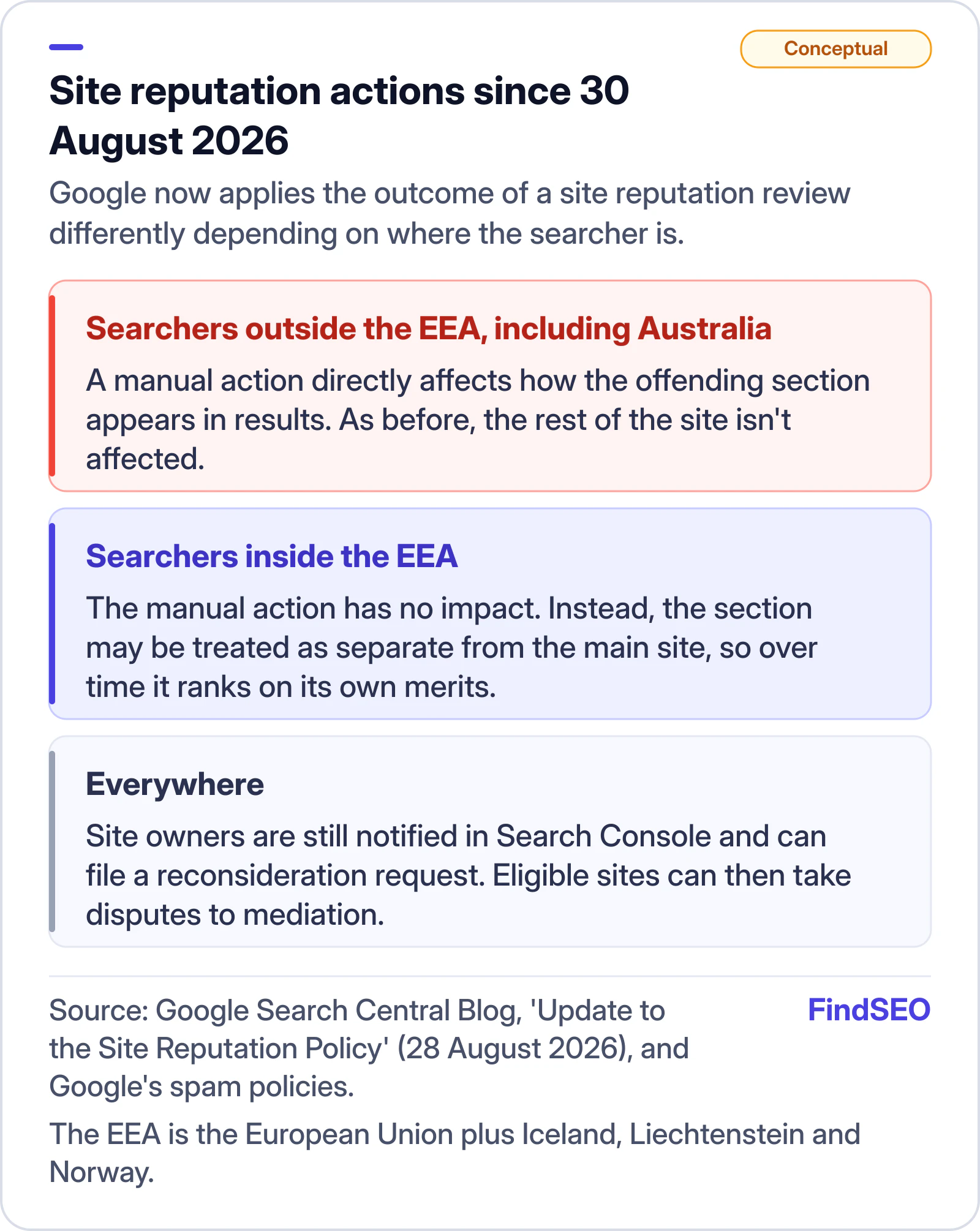
Site reputation abuse is publishing third-party content on an established website mainly so it can rank on that site's hard-earned ranking signals, rather than on its own merits. Google treats it as spam. Think coupon, casino or payday loan pages run by someone else on a trusted news, education or health domain. Outside the European Economic Area, including in Australia, a confirmed breach still brings a manual action against the affected section. Since 30 August 2026, searchers inside the EEA see a different outcome: the section is ranked separately from the main site instead.
This guide explains what the policy covers, what third-party content is still fine, how Google decides, what changed in 2026 and what to do if you're affected. It's a closer look at one of the rules in our overview of Google's spam policies.
What counts as site reputation abuse?
Google's site reputation policy applies where third-party content is published on a host site "mainly because of that host's already-established ranking signals", which the host earned mostly from its own first-party content. The aim of the tactic is for the content to rank better than it could on its own. The practice is often called parasite SEO.
Third-party content means content created by anyone separate from the host site. Google lists users of the site, freelancers, white-label services and people not directly employed by the host as examples. The policy was announced with Google's March 2024 core update and new spam policies and took effect on 5 May 2024. In November 2024 Google updated the policy wording after reviewing white-label services, licensing agreements, partial ownership deals and other arrangements. It said it wouldn't take a site's claims about how content was produced at face value.
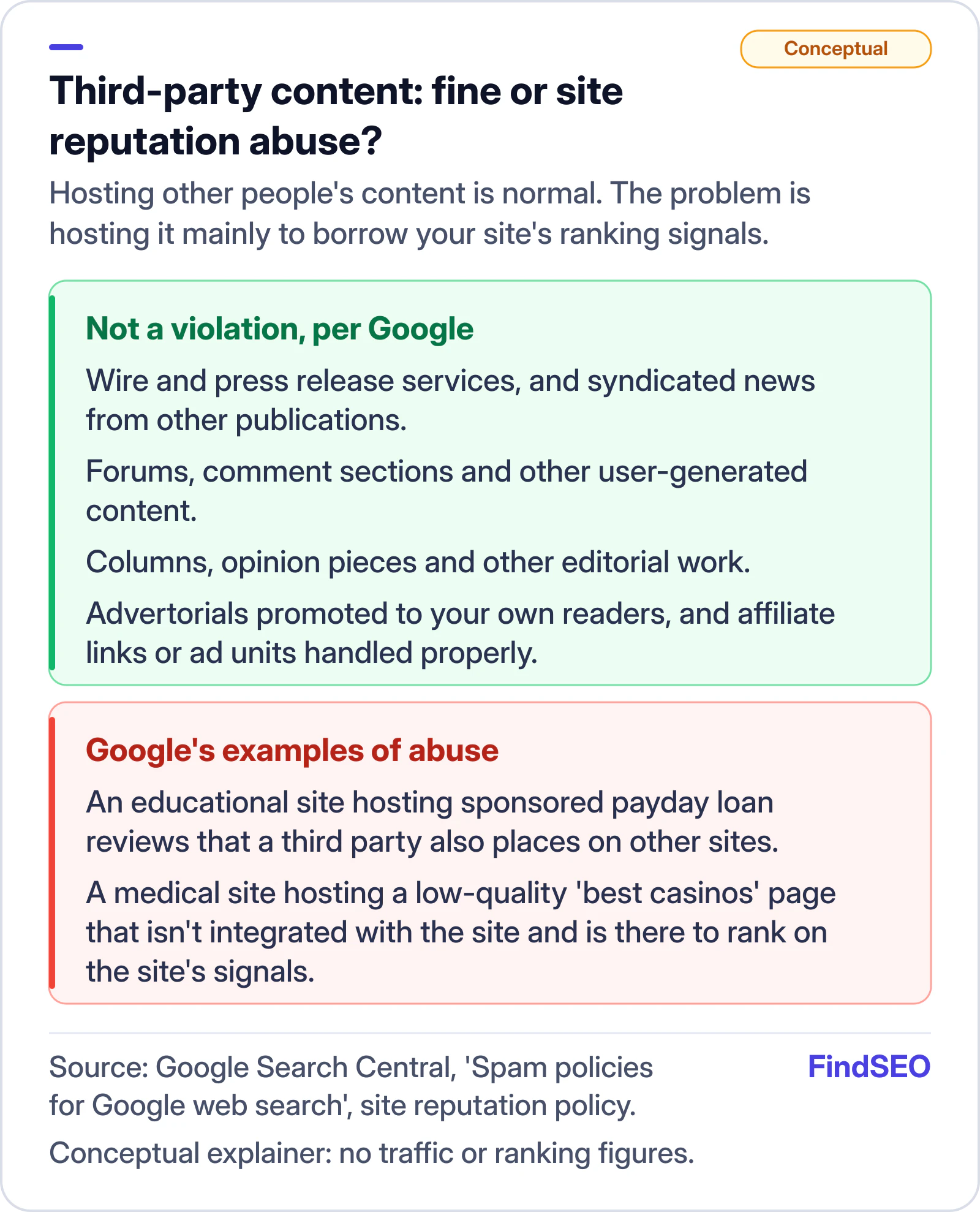
Google's two examples of abuse are an educational site hosting sponsored payday loan reviews written by a third party that also places the same page on other sites, and a medical site hosting a low-quality "best casinos" page that isn't integrated with the rest of the site.
What third-party content is still allowed?
Most of it. Google says that having third-party content isn't a problem in itself. It only breaches the policy when it's published mainly to exploit the host's ranking signals. Google's list of content that is not considered abuse includes:
- Wire services and press release services, and news publications syndicating news from other publications.
- User-generated content on sites built for it, such as forums and comment sections.
- Columns, opinion pieces and other editorial work, even when written by outside contributors.
- Advertorials and native advertising whose purpose is to reach the publication's own readers rather than to manipulate rankings.
- Affiliate links and third-party ad units placed throughout a page, as long as the links are treated properly under the link spam policy.
Paid placements also need the right link markup. Google's guide to qualifying outbound links asks publishers to mark advertisements and paid placements with rel="sponsored", and says nofollow is still an acceptable alternative.